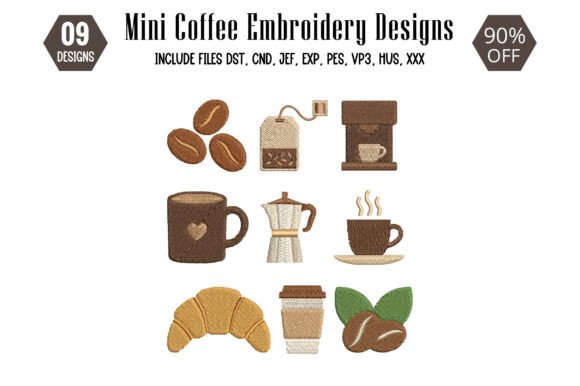
Mini Coffee Embroidery Design Review
As an experienced embroidery designer who has spent years refining digital assets for commercial use, I know that the difference between a generic decoration and a true brand asset lies in the details. When evaluating a machine embroidery design, I am not just looking at aesthetics; I am analyzing stitch density, scalability, and how well the file translates to real-world merchandise. Today, I am reviewing the Mini Coffee Embroidery Design bundle, a collection marketed with the promise of fueling creativity through nine unique coffee-themed motifs. This review focuses on how this embroidery file performs when applied to small business merch, branded patches, uniforms, and custom apparel.
First Impressions: The Visual Personality
The title Mini Coffee Embroidery Design immediately suggests versatility. The description highlights a charming aesthetic featuring coffee beans, cups, and takeaway styles. In my experience, "charming" is a powerful word for brands targeting the artisanal or boutique market. It implies a friendly, approachable, and perhaps slightly rustic vibe. For a small café, a handmade shop, or a creative studio, this visual personality aligns perfectly with a brand identity that values warmth and authenticity.
However, as a professional reviewer, I look past the marketing copy. Does the design feel premium or merely decorative? A successful digital embroidery file must balance detail with durability. If the designs are too intricate for their size, they risk becoming muddy blobs when stitched. The inclusion of nine unique designs is a significant plus, offering a variety of options for different applications, from a subtle chest logo to a bold back-of-shirt statement. The potential for a cohesive brand identity using these assets is high, provided the thread colors and spacing are executed correctly.
Real-World Business Applications
Let us imagine a scenario where a local coffee roastery wants to launch a line of branded merchandise. They need staff uniforms, customer gifts, and product packaging accents. This is where the Mini Coffee Embroidery Design shines. The variety within the bundle allows for strategic placement across different products.
For staff uniforms, one of the smaller coffee cup motifs could serve as a refined apron embroidery accent. It adds a touch of professionalism without overwhelming the garment. For a more playful approach, the takeaway coffee design works exceptionally well on caps. Cap embroidery requires precision, and a compact design ensures the motif sits correctly on the curved surface of the hat without distortion. Furthermore, for a boutique selling handmade goods, these designs can be transformed into embroidered patches. These patches can be sewn onto tote bags, denim jackets, or even used as a seal on product packaging, elevating the perceived value of the item.
I have also seen these types of designs used effectively as sleeve details on work shirts or as a subtle mark on the side of a tote bag. When used as a custom apparel element, the design helps create a uniform look that customers instantly recognize. Whether you are an Etsy seller creating handmade product lines or a florist expanding into gift sets, having a set of consistent design assets like this bundle streamlines your production process.
Strategic Considerations and Limitations
While the potential is great, there are critical areas where a designer must exercise caution. The term "Mini" in the title is a double-edged sword. While it suggests portability, it also warns of scale limitations. Small patch sizes often suffer if the stitch density is too high. If the original file contains tiny lettering or extremely fine outlines, reducing the size for a pocket patch may result in thread breakage or loss of definition.
Curved surfaces present another challenge. When applying this embroidery design to the front of a cap, the curvature can stretch the stitches, potentially distorting the image of the coffee bean or cup. Similarly, textured fabrics like heavy canvas or fleece can hide the details of a mini design. If the fabric texture is too rough, the thread colors might get lost, making the logo invisible to the naked eye.
Additionally, items that require frequent washing, such as aprons or work shirts, demand a robust construction. Designs with high stitch counts or loose floating threads are prone to snagging or pilling over time. Before committing to a large run, you must ensure the stitch density is appropriate for the intended fabric weight. Dark uniforms also pose a contrast issue; if the design relies on light thread colors, it may lack visibility unless a specific underlay or contrasting background is used.
Impact on Brand Identity and Customer Trust
In the world of small business, every stitch tells a story. A poorly executed commercial embroidery project can signal low quality, while a precise application builds trust. The Mini Coffee Embroidery Design, when used correctly, enhances brand identity by reinforcing the theme of the business. It signals attention to detail and a commitment to quality.
When customers see a clean, well-stitched logo on a tote bag or a neatly embroidered patch on a cap, they perceive higher value in the product. This visual consistency is crucial for buyer engagement. It transforms a simple commodity into a branded experience. For example, a baker using these designs on their aprons creates a memorable visual cue that customers associate with their sweet treats. The design acts as a silent ambassador for the brand, promoting recognition wherever the merchandise goes.
Practical Designer Notes for Production
Before you upload this file to your machine and start stitching for profit, there are essential steps to take. First, always test the design in black and white. This removes the distraction of color choices and allows you to evaluate the actual structure and spacing of the stitches. Check if the design remains legible when scaled down to a small patch size.
You must verify the thread color contrast against your target fabric. What looks good on a screen mockup may fail in reality. Inspect the spacing carefully; crowded stitches can cause puckering, especially on lightweight fabrics. Confirm the required hoop size and ensure your equipment can accommodate the dimensions without cutting off parts of the design.
Testing on real fabric is non-negotiable. Do not rely solely on a printable mockup for client approval. Use proper stabilizers to support the fabric during stitching, particularly for delicate materials. Create a physical sample to check for any issues with thread tension or pull. Finally, compare this design beside your other design assets to ensure it fits the overall aesthetic of your brand.
Most importantly, confirm the commercial licensing terms before using the Mini Coffee Embroidery Design for resale. Ensure you have the right to sell finished goods featuring these motifs. By following these rigorous checks, you ensure that your final finished product meets the high standards expected by today's discerning consumers.